
Ankle rehab · At home
Rebuild your ankle in your own shoe.
PAAD is a wearable resistance trainer for athletes coming back from an ankle sprain. Color-coded bands, four phases, no app, no electronics.
- v1.3
- In testing
- Queens, New York
- Started: 2026
Why we built it
Six weeks in a brace. Nothing rebuilt.
Sophomore year, Rishabh sprained his ankle and spent six weeks in a brace. It held the ankle still while it healed, but it didn't rebuild any strength. When the brace came off, he had nothing to train with at home. PAAD is what we wished he'd had.
Introducing
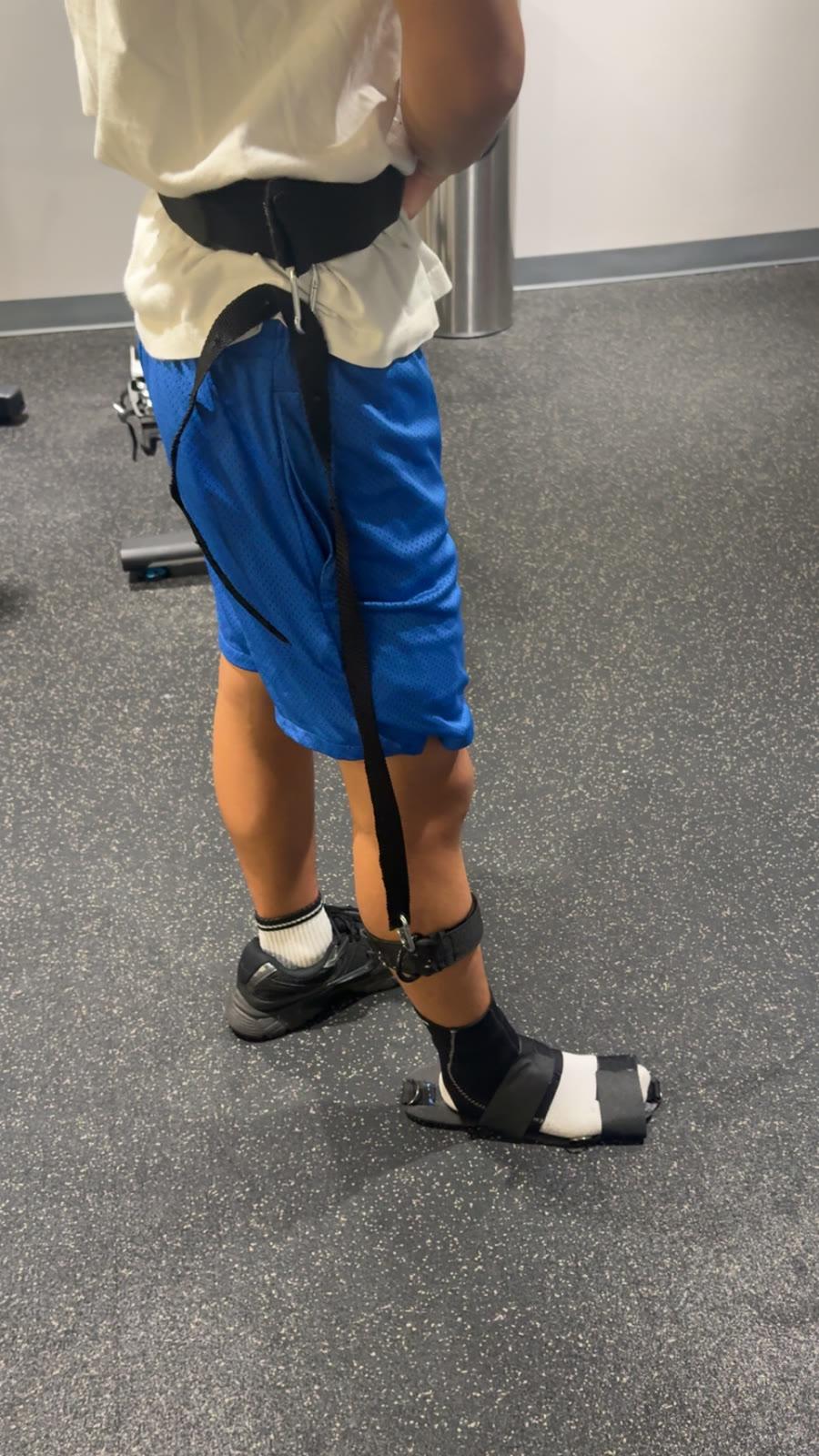
PAAD anchors resistance tubing between an insert in your shoe and a strap below your calf, then adds one movement at a time until your ankle is ready to play.
The problem
- 012M
ankle sprains in the U.S. every year
- 0240%
of people still have an unstable ankle one year after a first sprain
- 0312 of 13
people in our survey who skipped PT said they didn't think it was needed
The ligament usually heals. The strength doesn't come back on its own.
Herzog et al., Journal of Athletic Training, 2019 · Team PAAD survey, June 2026
How it works
Four parts. Your own shoe.
Insert
A thin HDPE insert inside your own shoe. Three sizes. Trim the toe to fit. Anchor rings sit at fixed points so trimming never cuts one off.
Photo coming soonCalf strap
Padded strap with a non-slip liner, just below the calf.
Photo coming soonBelt + tether
A waist belt and thigh tether hold the strap in place under load. We learned in v1.1 that a strap alone slides.
Photo coming soonTubing
Color-coded latex tubing calibrated against published TheraBand values. Swap a color to change the load.
Photo coming soon
What's new
What's different about PAAD.
We started from Clemson's hamstring device. When we moved the idea to the ankle, we found that bands pulling in opposite directions cancel out when the foot is neutral. So we redesigned PAAD around phased loading.
- 01
Phased loading
Movements are added one at a time, so opposing bands never cancel out.
- 02
Trimmable in-shoe insert
Works in the shoe you already train in.
- 03
Hip anchoring
Load runs up to the hip, so the calf strap stays put.
Ankle band devices already exist. None combine these three.
Provisional patent planned for March 2027.
How you put it on
On in three steps.
- Photo coming soon
Insert in, shoe on.
Slide the insert into your own shoe and lace up like normal.
Belt and calf strap.
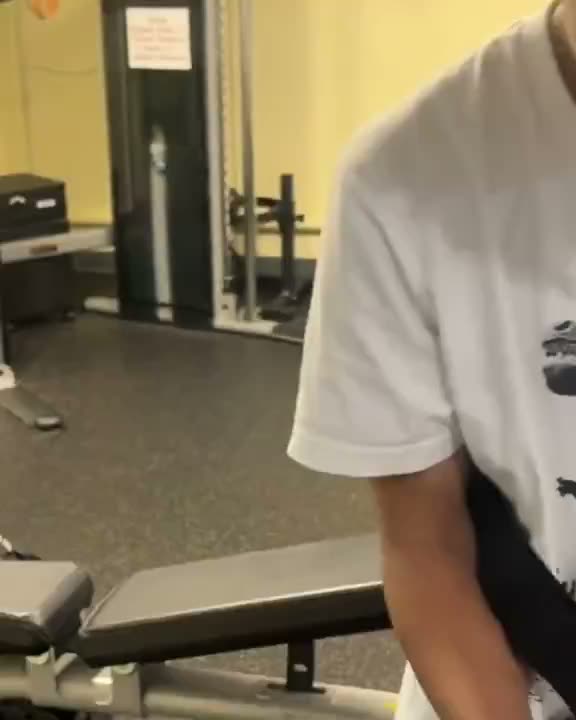
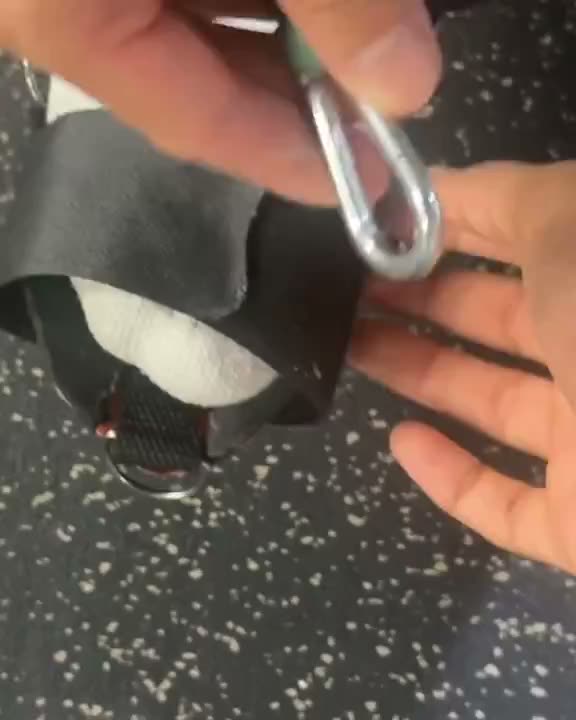
Buckle the belt around your waist. Wrap the calf strap just below your calf and clip the tether to it.
Clip in the band.
Clip the tubing between the calf strap and the insert. Start with yellow.
The four phases
One movement at a time.
Phase 01
Yellow · 3.0 lbEversion. Push your foot out, the opposite of how most sprains happen.
Phase 02
Red · 3.7 lbAdd plantarflexion. Point your toes. This is your push-off.
Phase 03
Green · 4.6 lbAdd dorsiflexion. Pull your toes up. This is your landing.
Phase 04
+ InversionInversion comes last, because that's the direction that got hurt.
About seven weeks. 15 to 25 minutes a session. Load starts light while the ligament heals, then goes up as strength comes back.
Resistance at 100% stretch.
PAAD is a prototype in development. It does not replace care from a doctor, physical therapist, or athletic trainer.
How it compares
What athletes use now.
| Rest | Braces | Loose bands | Clinic PT | PAAD | |
|---|---|---|---|---|---|
| Trains all 4 directions | No | No | No | Yes | Yes |
| Set resistance | No | No | No | Yes | Yes |
| Built-in progression | No | No | No | Yes | Yes |
| Fixed anchor points | Not applicable | Not applicable | No | Yes | Yes |
| At home | Yes | Yes | Yes | No | Yes |
| In your own shoe | Not applicable | Yes | No | No | Yes |
Build log
Five versions. Every failure written down.
v1.3
- Date
- Nov 2026
- Tested by
- Jeff + 5 athletes
What changed
In-shoe insert in three sizes, ring sleeves, grip layer.
What broke
- Insert shifted in the shoe for two testers
- Ring sleeves moved during reps
- Tubing rubbed the shoe
- Eversion felt harder than the other movements
- One tester needed help putting it on
Field notes
Five athletes. Four sports.
All five finished every movement. Parents gave permission for every tester under 18.
“The shoe insert is more comfortable than the earlier sandal version.”
Tester breakdown
- Testers
- 5
- Ages
- 16–18
- Sports
- Basketball, soccer, track, volleyball
- Prior ankle sprain
- 4 of 5
- Session length
- 15–25 min
- Finished every movement
- 5 of 5
What we'll measure
How we'll know.
- 01
Completion
How many athletes finish all four phases.
- 02
Re-injury
Re-sprains and lasting instability, checked against the 40% of people who still have an unstable ankle a year after a first sprain.
- 03
Confidence
How confident athletes feel returning to play.
Roadmap
What's next.
- December 2026
Build v1.4
Fix the five things v1.3 testing found.
- January 2027
Testing round 2
10+ athletes, same log as v1.3.
- January 2027
Survey past 50
Grow the survey past 50 responses.
- February 2027
Expert review
Design review by sports medicine faculty and athletic trainers.
- March 2027
Provisional patent
File a provisional patent on the design.
- April 2027
100-unit pilot
First 100 units to athletes and families on the waitlist.
Survey
We asked 24 people.
- 83%
of 24 athletes, family members, and healthcare professionals said they'd use it
- 14 of 24
said seeing progress would keep them consistent, the top answer
- 20 of 24
would pay $20 to $40 or more
Team PAAD survey, June 2026 (24 valid responses)
Business
$35Per unit
$35 because 20 of 24 people would pay $20 to $40 or more.
Who first
High school basketball, soccer, and volleyball players. That's about 2.27 million athletes (NFHS, 2024-25).
Parents buy, athletes use.
| Per unit | Prototype today | Target at 100+ units |
|---|---|---|
| Price | $35.00 | $35.00 |
| Materials and packaging | $23.00 | $11.25 |
| Assembly labor (est.) | $8.50 | $4.25 |
| Payment processing (est.) | $1.32 | $1.32 |
| Profit per unit | $2.18 | $18.18 |
Go to market
- 01Pilot with athletes and families we already know, including TinyBallersRego families
- 02Short-form video and our YouTube channel
- 03Then school athletic programs, athletic trainers, and youth sports nonprofits
Revenue
Direct sales, team packs for schools and clubs, replacement tubing sets.
The ask
$2,000 builds v1.4 and a 100-unit pilot.
The 100-unit pilot brings in $3,500 in sales. At target cost, every unit after about 110 is profit.
- $1,300Pilot batch
- $300v1.4 prototypes and testing
- $200Contingency
- $135Domain, packaging, marketing clips
- $65Provisional patent
Meet the team
Team PAAD
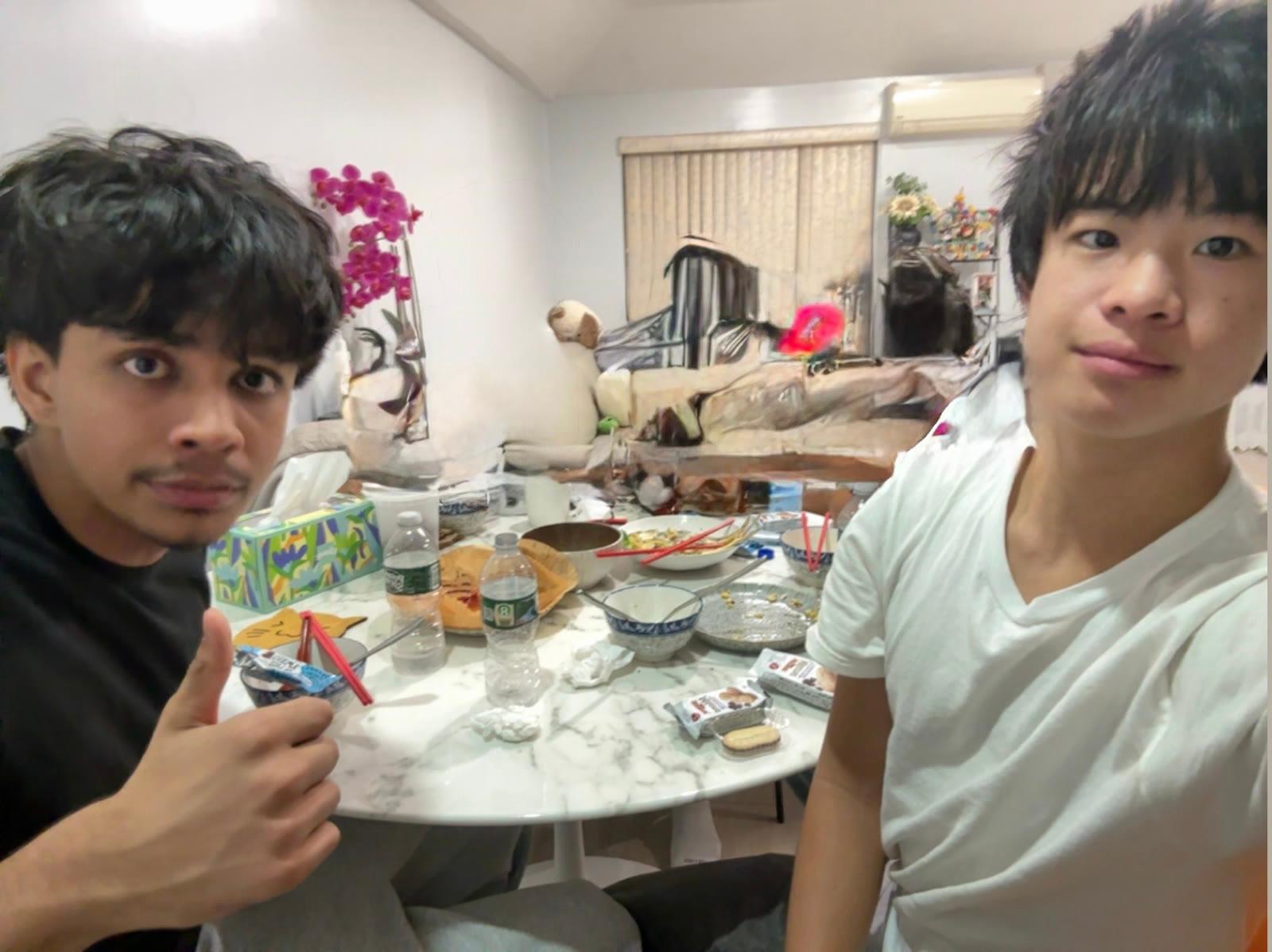
Friends since preschool. Same courts, new goal.
We met in preschool and grew up playing on the basketball courts at P.S. 139Q in Rego Park, Queens. Now we are building something to help the players on those same courts come back from ankle sprains.
- 01

Rishabh Patel
Founder, design and engineering
Sprained my ankle sophomore year and spent six weeks in a brace that held it still and rebuilt nothing. I've built every version of PAAD, document it on YouTube, and run TinyBallersRego, a youth basketball camp in Rego Park.
- 02

Jeff Chow
Testing and research
Dealt with my own ankle injuries and was PAAD's first outside tester. I run our testing rounds, lead our survey, and co-wrote our video.
- 03

Nitin Patel
Coach
Runs his own accounting firm and keeps us on deadline.
Our story
Watch the film
